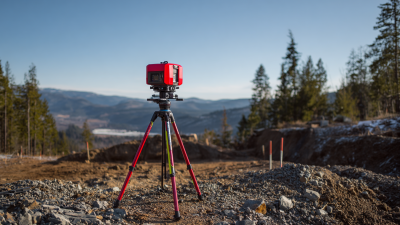
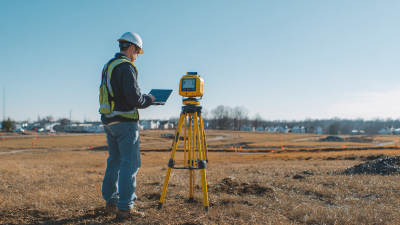
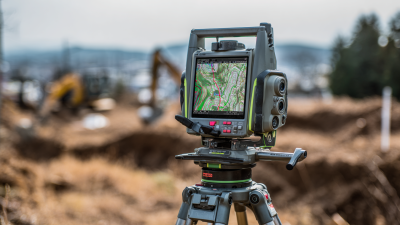
Hey, if you're dipping your toes into the ever-changing world of positioning tech, getting a handle on Gnss Rtk Base And Rover systems is pretty much essential. I mean, experts like Dr. Mark Thompson from Precision Mapping Technologies keep stressing how crucial precision is in these tools. He’s quoted saying, “The future of surveying lies in our ability to harness GNSS RTK Base and Rover technology effectively.” That really highlights how important it is for folks in the field to stay updated on the latest in GNSS RTK tech.
As we’re heading toward 2026, the need for accuracy and dependability in surveying has become more critical than ever. Using things like the Rtk Gnss Base Rover systems means real-time corrections—giving us centimeter-level precision, which is a total game-changer. These systems are super important across different industries, from farming to building sites. But, of course, when choosing your gear, it’s smart to think about compatibility and overall performance.
That said, even with all this fancy tech, there are still challenges. Signal interference, calibration issues, you name it—these are common hurdles. Keeping yourself educated and staying adaptable are key to getting the best results out in the field. The path through the GNSS RTK Base and Rover market isn’t straightforward, but investing in the right systems is crucial for making your work more efficient and accurate in the long run.

Overview of GNSS RTK Technology and Its Applications
GNSS RTK technology plays a critical role in precision agriculture, surveying, and construction industries. According to a recent report by the International GNSS Service, the GNSS market is projected to grow at a CAGR of 8%from 2021 to 2026. This growth showcases how vital accurate positioning is becoming. Gnss Rtk Systems providecentimeter-level accuracy, allowing for improved efficiency and productivity in various applications.
However, the technology is not without its challenges. Signal interference, multi-path errors, and limitations in urban environments can disrupt GPS accuracy. As noted in studies, nearly 30% of users face issues with signal reliability in dense urban areas. This introduces a critical aspect for GNSS RTK base and rover systems that users must consider when deploying their technology.
Additionally, while the technology promises high precision, the initial costs for setting up GNSS RTK base and rover systems can be prohibitive for smaller businesses. Despite this, the long-term benefits often outweigh the initial investment. It's crucial that users conduct thorough research to navigate these considerations effectively. Balancing the advantages with the potential hurdles can lead to better decision-making in the implementation of GNSS RTK technology.
Key Features of Top GNSS RTK Base and Rover Systems in 2026
In 2026, the landscape of GNSS RTK base and rover systems is evolving rapidly. Advances in technology have led to significant improvements in accuracy and reliability. According to industry reports, high-end systems are achieving centimeter-level precision under various conditions. This performance is crucial for applications like agriculture, construction, and surveying.
Key features of these systems include multi-frequency signals. They enhance robustness against interference, improving overall reliability. Many top systems today support signals from multiple constellations, like GPS, GNSS, and BeiDou. This ensures better coverage even in challenging environments. Furthermore, the integration of AI for data processing is becoming more common. It helps processes become more efficient, saving time and reducing costs.
However, challenges remain. Despite advancements, some users report connectivity issues in dense urban areas. Dependence on satellite signals can lead to disruptions. Additionally, interoperability between different Base RTK GNSS and rover systems can be complicated. Stakeholders are urged to invest in research to address these shortcomings. Regular updates and training are needed for optimal system performance in the field.
2026 Top GNSS RTK Base and Rover Systems - Key Features
| System Type | Accuracy | Communication Range | Weight | Battery Life | Operating Temperature |
| Base Station | Centimeter-level | 10 km | 2.5 kg | 24 hours | -20°C to 60°C |
| Rover | Centimeter-level | 5 km | 1.5 kg | 12 hours | -20°C to 50°C |
| Base Station | Decimeter-level | 15 km | 3.2 kg | 30 hours | -30°C to 70°C |
| Rover | Decimeter-level | 2 km | 1.2 kg | 10 hours | -10°C to 45°C |
Comparative Analysis of Leading GNSS RTK Systems: Performance Metrics
When evaluating GNSS RTK systems, performance metrics play a crucial role. Accuracy is a key factor. A robust Rtk Gnss Base And Rover system should consistently deliver centimeter-level precision. However, many users report fluctuations in accuracy during field operations. These variations can be due to environmental factors like tree cover or urban settings.
Another important metric is the convergence time. Quick initialization is critical for efficiency in the field. Some systems boast rapid start-up times, while others may take longer. Users might find themselves waiting too long to get reliable signals. Latency is also a concern in real-time applications, where delays can hinder productivity.
The communication range is vital as well. A good RTK GNSS base and rover setup should support extended distances without losing signal integrity. However, some systems struggle in varying terrains or with obstacles. It's essential to understand these limitations. Users need to assess their specific needs and consider these performance metrics before making a decision.
Integration of GNSS RTK Systems with Modern Surveying Tools
The integration of GNSS RTK systems with modern surveying tools is transformative. RTK (Real-Time Kinematic) technology enhances positioning accuracy significantly. Reports indicate a growing trend where 63% of surveyors now rely on Gnss Rtk Base And Rover systems for their projects. This shift reflects an industry move towards more precise measurements in various applications, including construction and agriculture.
Modern surveying tools, paired with GNSS RTK systems, offer enhanced efficiency. Drones equipped with RTK capabilities are particularly popular. They can perform detailed mapping tasks faster and with greater accuracy. A staggering 75% of professionals reported improved productivity using these technologies. However, there are challenges. Integration issues can arise, demanding further training and adaptation. The technology is not foolproof, and understanding its limitations is crucial.
Moreover, the data generated can be overwhelming. Surveyors need to develop strategies to manage and analyze this information effectively. While the accuracy of GNSS RTK Base and Rover setups is impressive, incorrect assumptions can lead to costly errors. Surveyors must ensure proper calibration and validation of their systems. Continuous learning is essential as the industry evolves rapidly.
Future Trends in GNSS RTK Technology: Innovations and Improvements
The future of GNSS RTK technology is filled with innovations. High-precision demands drive systems to adopt advanced algorithms. According to recent industry reports, the accuracy of RTK systems is expected to improve significantly, aiming for centimeter-level precision within the next few years. This precision can revolutionize fields like agriculture and construction, enabling better data analytics and decision-making processes.
New trends show that integration with Edge Computing is on the rise. Data is processed closer to the source, which reduces latency. Such advancements are crucial for real-time applications. However, this also raises questions about data security and device interoperability. While the technology progresses, users must critically evaluate these aspects. The ongoing challenge is balancing innovation with practical implementation.
Furthermore, advancements in multi-frequency GNSS signals enhance reliability, especially in urban settings. The latest systems are starting to include signals from multiple satellite constellations. While this offers improved performance, it also complicates hardware requirements. Some users may feel overwhelmed by these changes. Understanding how to adapt is vital. The path ahead is promising but not without its hurdles.
Considerations for Selecting the Right GNSS RTK System for Your Needs
When choosing a GNSS RTK base and rover system, several factors come into play. Think about your specific needs. Will you use it mainly for surveying, agriculture, or construction? Each application might require different features. For instance, some users need high accuracy under various conditions. Others may prioritize ease of use or portability.
Another vital consideration is the environment in which you'll operate. Urban areas can obstruct signals. Open areas provide better performance. Durability is also crucial. You want a system that can withstand harsh weather and rough handling. It's essential to assess battery life, as long operations can drain power quickly.
Finally, keep in mind your budget. Higher-end systems offer advanced features but may not always be necessary. Sometimes, basic functionalities suffice. Therefore, reflect on your long-term goals. Investing in unnecessary capabilities may lead to dissatisfaction later. Clarifying your requirements early on will help you make a more informed choice.
Challenges and Solutions in GNSS RTK Implementation and Usage
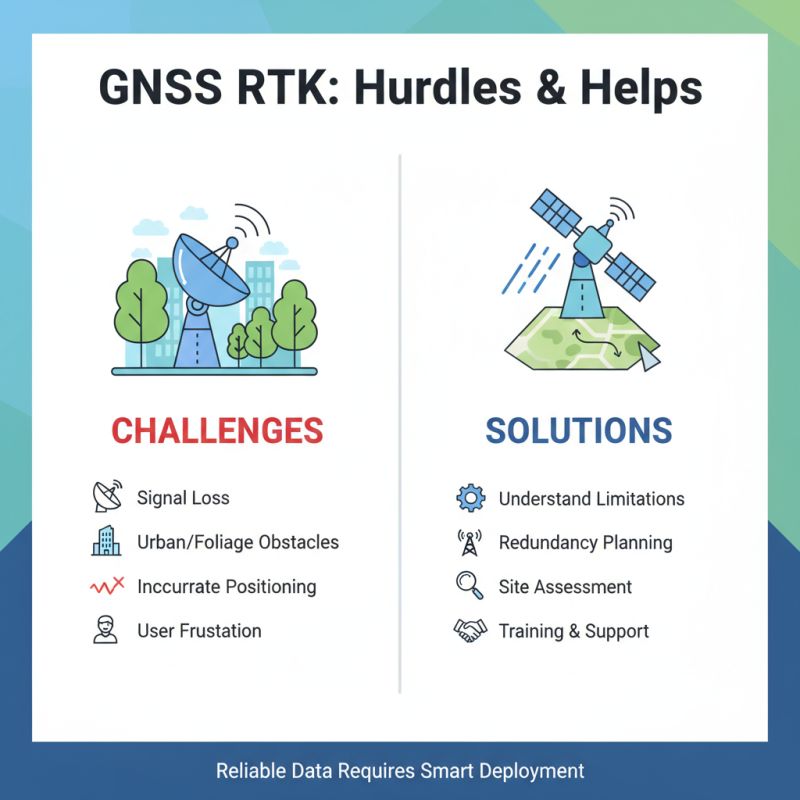
The implementation of GNSS RTK systems often faces significant challenges. One major issue is signal loss, which can occur in urban environments or under heavy foliage. This disruption can lead to inaccurate positioning. Users might quickly become frustrated when the system fails to provide reliable data. It's essential to understand these limitations when deploying GNSS RTK technology.
Another challenge is user training. Many new users attempt to operate these systems without adequate knowledge. This can lead to improper use and data errors. Experienced operators can still encounter issues, such as hardware malfunctions or software glitches. These problems can derail a project, causing delays. It’s crucial for teams to stay updated on technology trends and best practices.
To address these issues, ongoing training and support are vital. Investing in clear instructional resources can help users overcome initial hurdles. Additionally, building a supportive community of practiced users allows for knowledge sharing. Learning from real-world experiences highlights what works and what doesn't. Continuous feedback is essential for improving GNSS RTK systems. Reflecting on past challenges and finding solutions promotes better practices in the field.
Exploring the Benefits and Features of the 2.5m Carbon Fiber GNSS Pole for Accurate Surveying and Mapping
The 2.5m Carbon Fiber GNSS Pole stands out as an essential tool for professionals engaged in surveying and mapping. Its lightweight design, combined with the durability provided by carbon fiber, allows for easier transport and handling without compromising performance. According to the International Federation of Surveyors (FIG), efficient equipment can enhance productivity in fieldwork by as much as 30%. This significant increase underscores the importance of selecting advanced materials that facilitate the demanding needs of geospatial professionals.
Moreover, the features of the 2.5m Carbon Fiber GNSS Pole promote accuracy and reliability in data collection. A study by the National Oceanic and Atmospheric Administration (NOAA) indicates that precise surveying equipment can reduce positional errors to within centimeters, which is critical for detailed mapping applications. The pole’s ability to withstand harsh weather conditions further ensures uninterrupted operations, leading to more consistent outputs across various terrains.
Equipped with quick-lock mechanisms and adjustable height settings, the 2.5m Carbon Fiber GNSS Pole can adapt to different surveying scenarios, enhancing usability. The flexibility offered by such poles allows for a diverse range of surveying techniques, which can improve data collection efficiencies. In the face of growing demands for accurate and quick turnaround times in mapping projects, investing in high-quality GNSS poles is vital for surveyors aiming to elevate their operational capabilities.
Conclusion
The article "2026 Top GNSS RTK Base and Rover Systems What to Know?" provides a comprehensive overview of GNSS RTK technology and explores its diverse applications in surveying and navigation. It highlights the key features of the top GNSS RTK base and rover systems of 2026, emphasizing their performance metrics and how they compare against each other. Additionally, the integration of these systems with modern surveying tools showcases the advancements in accuracy and efficiency.
Looking into the future, the article discusses upcoming trends and innovations in GNSS RTK technology, offering insights into potential improvements and adaptations. It also provides critical considerations for selecting the right GNSS RTK base and rover systems tailored to specific project needs, while addressing common challenges and solutions encountered in their implementation and usage. This encapsulates the evolving landscape of GNSS RTK systems, ensuring users are well-informed for optimal decision-making.